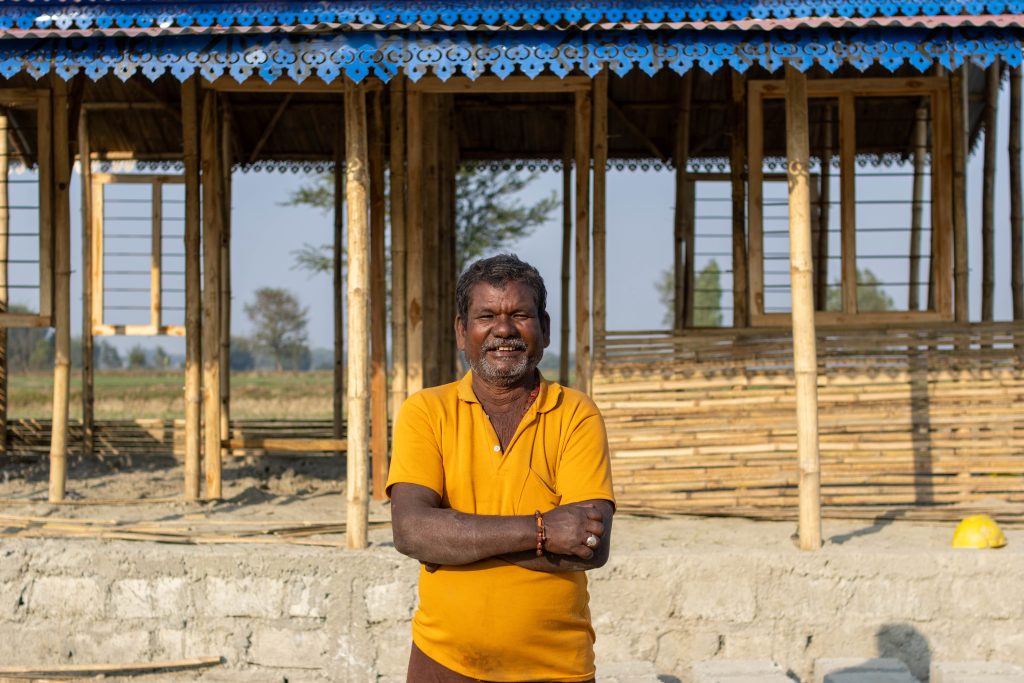
Somewhere nearby, a temple is playing devotional music. Closer, there’s the sound of bamboo being cut and hammers driving nails. Jharku Rishidev, 62, stands at the edge of what will soon be his home and listens to both.
He has spent most of his life building other people’s things on other people’s land.
Jharku and his wife Indraa, 72, are from Gadi Rural Municipality, ward no. 03, a community where land ownership has long been a privilege rather than a right. As a boy, Jharku cleared forests and tilled fields for landlords. In return, his family received food, small wages, and informal permission to live on a piece of land they could never call their own. When landlord families eventually reclaimed it, there was nothing to contest and nowhere to go. The family later settled beside a road and a canal. Then the road expanded. Their home was demolished. Fifteen other households lost theirs too. Rebuilding on the same site wasn’t possible as the land had been absorbed by the road, the remaining strip sat dangerously close to the canal, and none of it was legally registered.
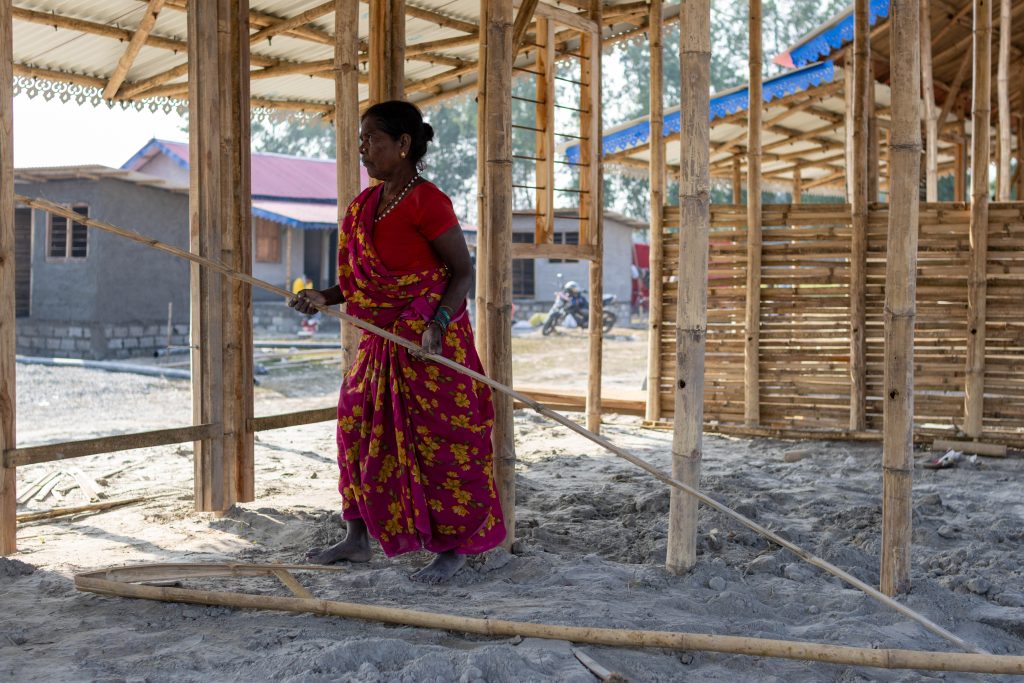
Jharku was in his sixties. He had no land title, no legal claim, and a family to house. What happened next was not charity. It was collective action.
Jharku and 20 other displaced families decided to pool resources and purchase land together. His family’s share, 12 dhur (roughly 203 sq. mt.), cost NPR 240,000 (EUR 1,373), far beyond what they could raise alone. Habitat for Humanity Nepal, working alongside Sankalpa Nepal, with the generous support of Habitat for Humanity Netherlands and Stichting de Waterlander, facilitated access to a microloan through a local microfinance institution. The family now repays approximately NPR 6,000 (EUR 34) per month.
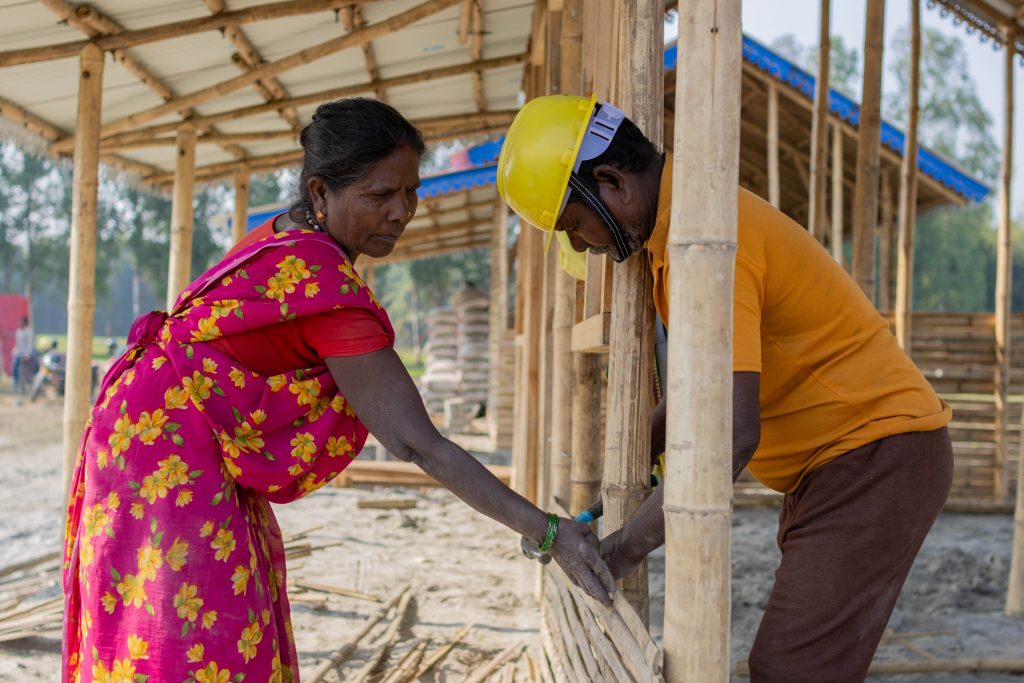
With land secured, construction began which was built largely through the family’s own labor and community effort. The house is built with cement bamboo frame technology, or CBFT, with a plinth above three feet and designed to withstand both earthquakes and floods. Jharku had seen bamboo houses before consisting of two rooms, kitchen, veranda, separate toilet and bathing space, and knew what to expect.
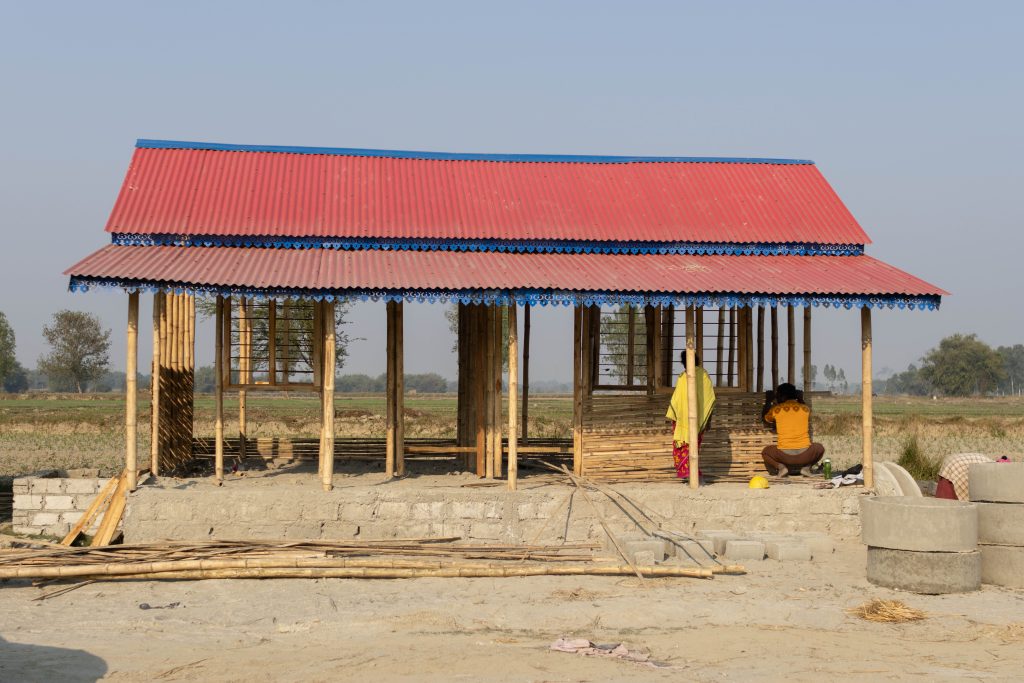
“Even if this is a bamboo house, it will be neat, strong, and beautiful. I won’t feel scared even if there’s flooding. That’s why we wanted to move here,” he says.
Indraa is a ward member, an elected voice in local governance. She has spent years contributing to her community’s development. Yet until now, her name appeared on no land document. For the first time, the ownership certificate for this land is registered jointly, in both Jharku’s name and hers. It is a legal detail with weight that extends beyond this household. “Having my name on the land certificate gives me dignity and confidence,” she says. “After so many years of uncertainty, this house means stability for our family.”
Jharku says: “I spent my whole life working on other people’s land. Today, even at this age, I feel peace knowing my family finally has a place of our own.”
Jharku and Indra’s story sits at the heart of Habitat for Humanity Nepal’s work: Building homes that hold, securing land rights that last, and changing the systems that kept families like theirs in uncertainty for generations. It is part of a larger effort to ensure that safe, adequate housing is not a privilege but a foundation.
That foundation begins with a door. Let’s Open the Door.