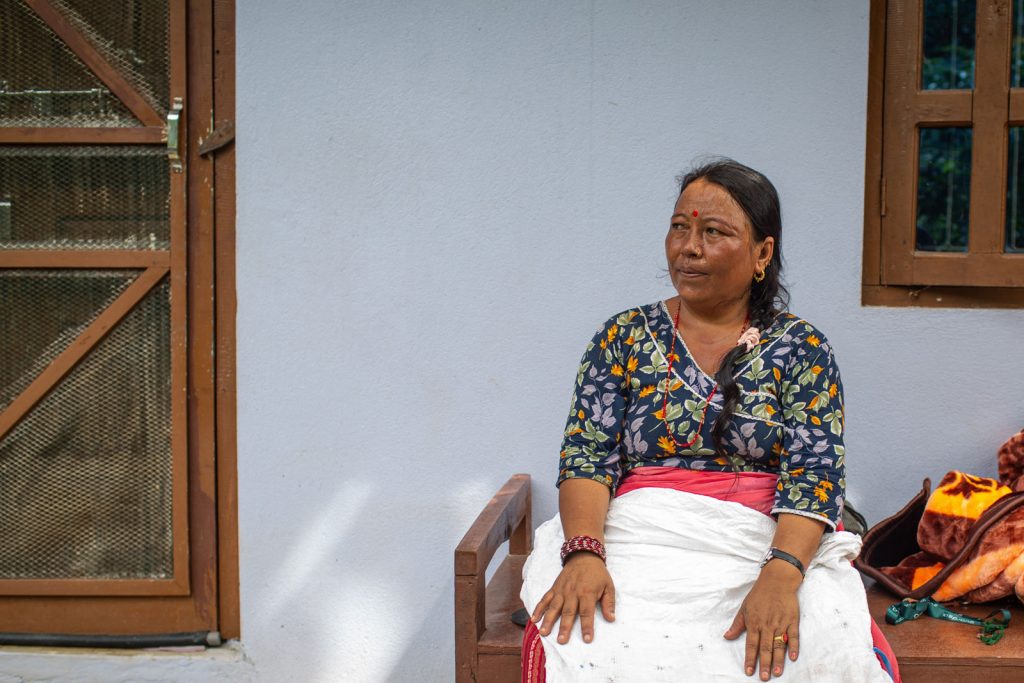
Manju cuts open the emergency shelter kit with a sickle. She looks for the tarpaulin. “I need the tarpaulin to cover the area to observe funeral rites,” she says.
Five people from her family were caught in the flood. That includes her son, three grandchildren, and her elder sister. Her house, near the petrol pump downhill, is gone; the land itself is now part of the river. The rice stored inside, the five pigs she kept, the jewelry in her closet, the mattress, the blanket, all of it went with the water.
“I don’t even have an inch of land to my name anymore,” she says. She is sleeping on a khatiya on a neighbor’s porch, hoping the water doesn’t come back.
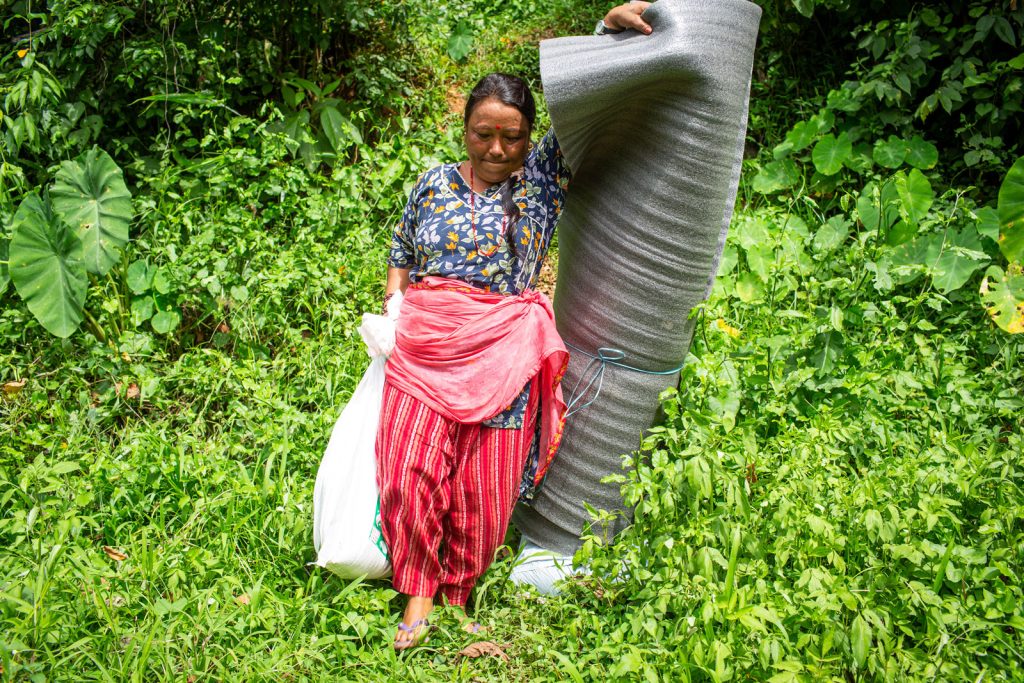
She does not think about her own situation. She thinks about the rituals owed to the family, dead and alive. “My family will come over to observe the rituals for the dead, we need a lot of resources,” she says. She is grateful for what has come. Even though she doesn’t have anything, she thinks of the tarpaulin that she will use to shed light and rain. “It is a relief, it’s support. Otherwise, there would be nothing.”
Manju has not gone looking for further relief materials. Anyway, she lives 5 kms away from the Uttargaya Rural Municipality, with cliffs and a river to cross. Grif and a bad knee have made even hauling the kit to her refuge difficult. The people who need help the most in the first days are often the ones least able to ask for it. Help has to find them.