April 2026 | IMPACT 2026 III | Biratnagar and Dharan
There is a particular moment in any field visit when something clicks. You can see it, a student pausing mid-step, really looking at a wall, running a hand along a joint, asking a question they hadn’t thought to ask before. That moment happened more than once during what became, the first Type Design Workshop of its kind in Nepal’s affordable housing sector.
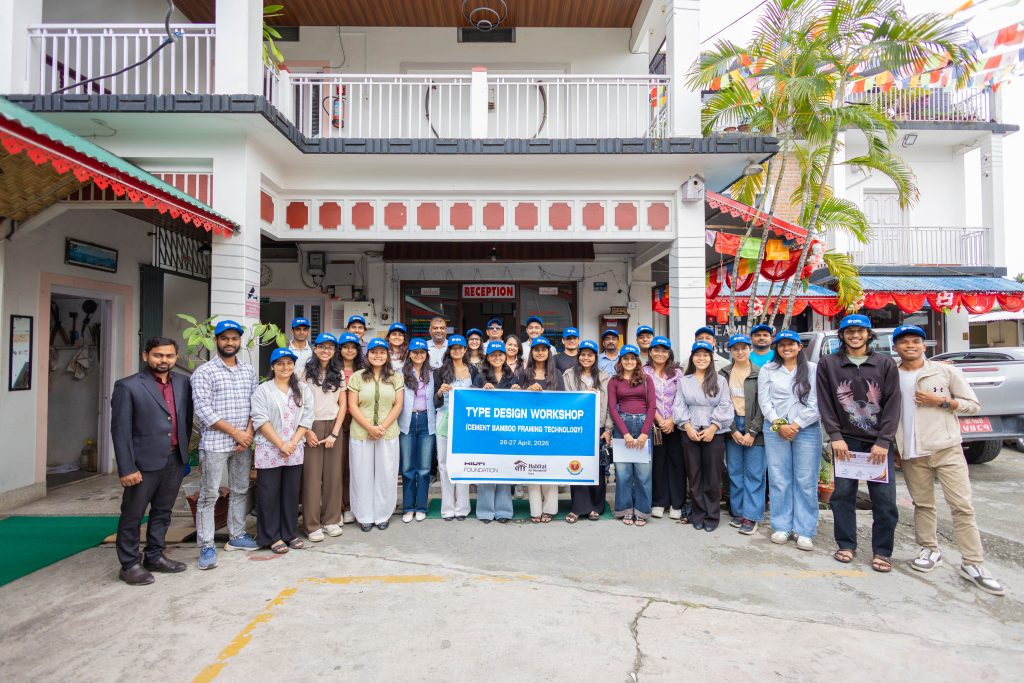
Over two phases in April 2026, an exposure visit and interaction session on 18 April in Biratnagar, and a two-day presentation workshop on 26 and 27 April in Dharan, Habitat for Humanity Nepal and Sahara Nepal brought architecture students from the Institute of Engineering or IoE into a conversation that the sector has long needed: what does bamboo-based affordable housing look like when designed by the next generation?
Starting where it matters
The first phase began not in a classroom, but in Gadhi Rural Municipality in Sunsari district and Sampanna Basti in Morang district, eastern Nepal, where ongoing and completed bamboo housing sites gave 20 Bachelor-level architecture students from Purwanchal Campus, IOE, a ground-level understanding of what low-cost, climate-resilient housing actually looks like in practice. Construction realities, community context, and implementation challenges are not always visible on a blueprint. The field visit made it tangible.
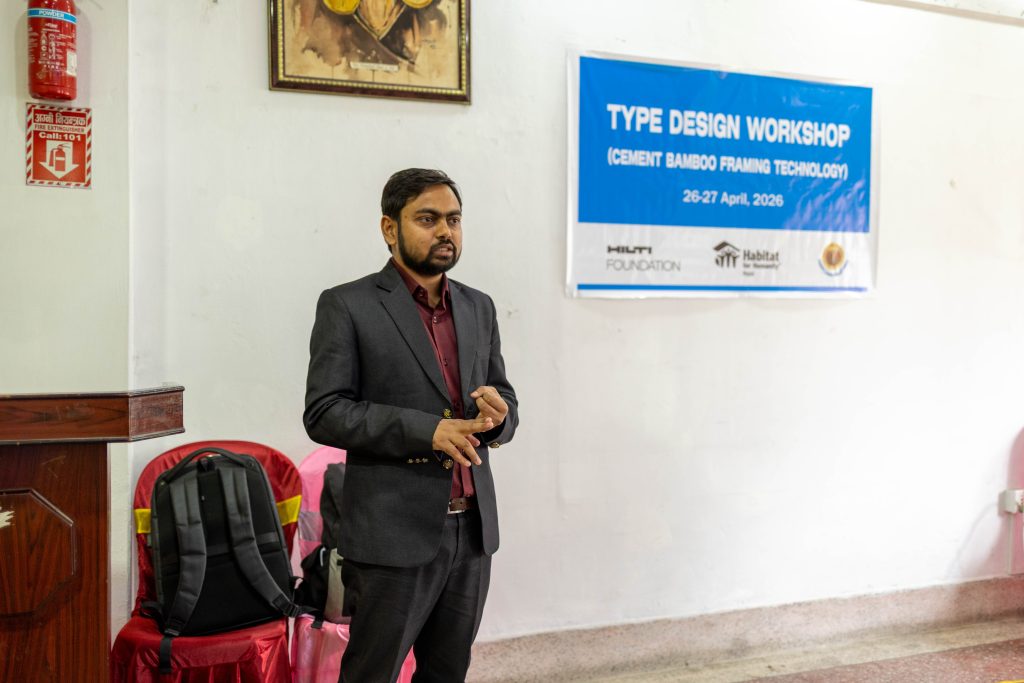
Following the exposure visit, a technical session at the Habitat Nepal office in Biratnagar connected field observation with policy. Housing Research and Innovation Manager Anshu Kumar Pal walked students through the technical fundamentals of sustainable bamboo housing, including Nepal’s National Bamboo Guideline, endorsed by the Government of Nepal in November 2025, a milestone that formally recognises designed bamboo-based technology as a safebuilding construction technology for housing across the country.
From observation to design
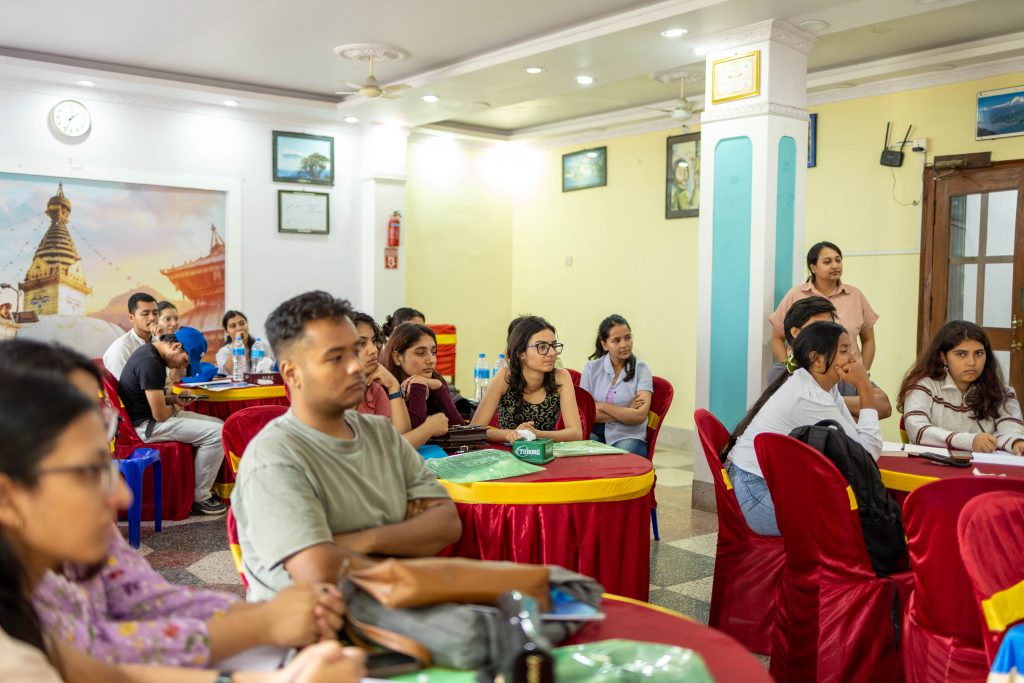
The second phase asked students to do something harder: turn what they had seen and learned into housing proposals. While 25 students participated in the workshop, six students presented bamboo housing design concepts. Each addressed low-cost construction, structural resilience, space planning for low-income households, and adaptability to local conditions.
What is interesting about the presentations was not just the creativity, but the groundedness. These were not speculative designs for an imaginary client. They were shaped by real sites, real families, and a real policy framework. Facilitators from Purwanchal Campus, Habitat Nepal, and Sahara Nepal provided technical feedback on each proposal, identifying which concepts hold genuine promise for field application under the Safe Housing Program.
Why this workshop matters
Nepal’s housing sector has for too long kept academia and implementation in separate rooms. This workshop, the first of its kind, began to change that. It created a space where young architects, technical engineers, field practitioners, and policymakers engaged with the same problem from different angles. And it produced something that briefing rooms rarely do: fresh thinking rooted in real constraints.
The design concepts presented in Dharan will now undergo further technical review. Selected proposals will be refined and considered for pilot application in future implementation cycles, a direct line from student sketchpad to community housing site.
That line is what makes this workshop significant. Not just as a one-time event, but as a model for how the affordable housing sector in Nepal can engage with innovation, academia, and nature-based solutions like bamboo construction technology, systematically, at scale, and with the next generation of built environment professionals at the table.