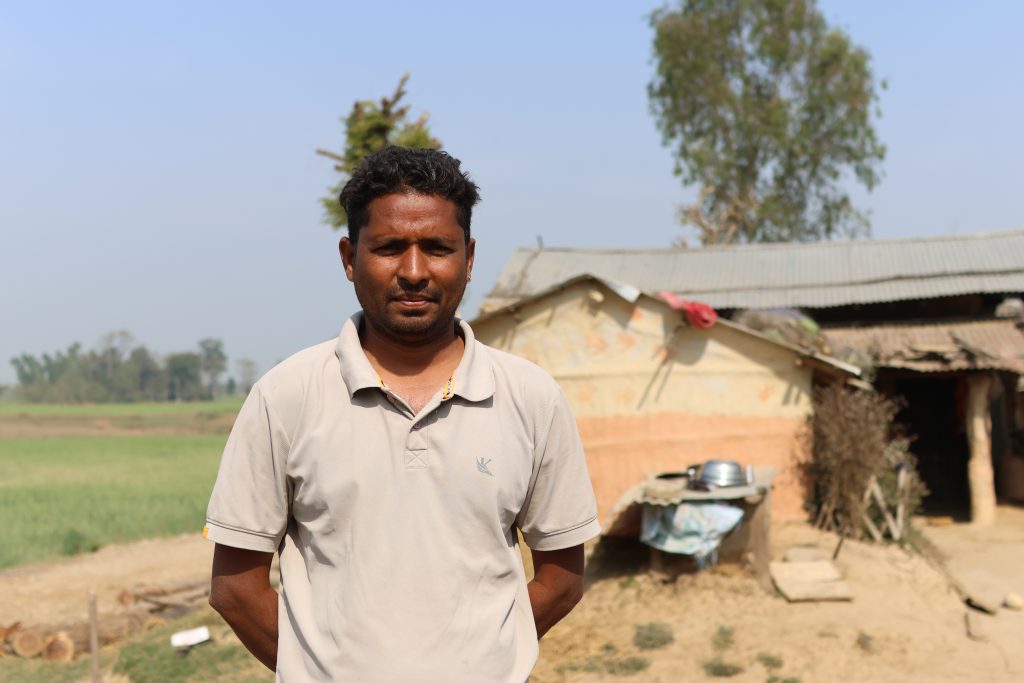
Milan, 32, has spent enough monsoons watching water claim his home to know what it costs, not just in damage, but in disruption. Every year, without fail, his mother Mansara, his wife, and his two sons Sagar and Safal leave for the safe center while Milan and his younger brother Ganesh haul tarps to the Hulaki sadak, camping roadside with their cows and goats for up to a week as the floodwater settles in.
“With the monsoon, the water is like another member of the house,” he says. “It’s there whether you want it to be or not.”
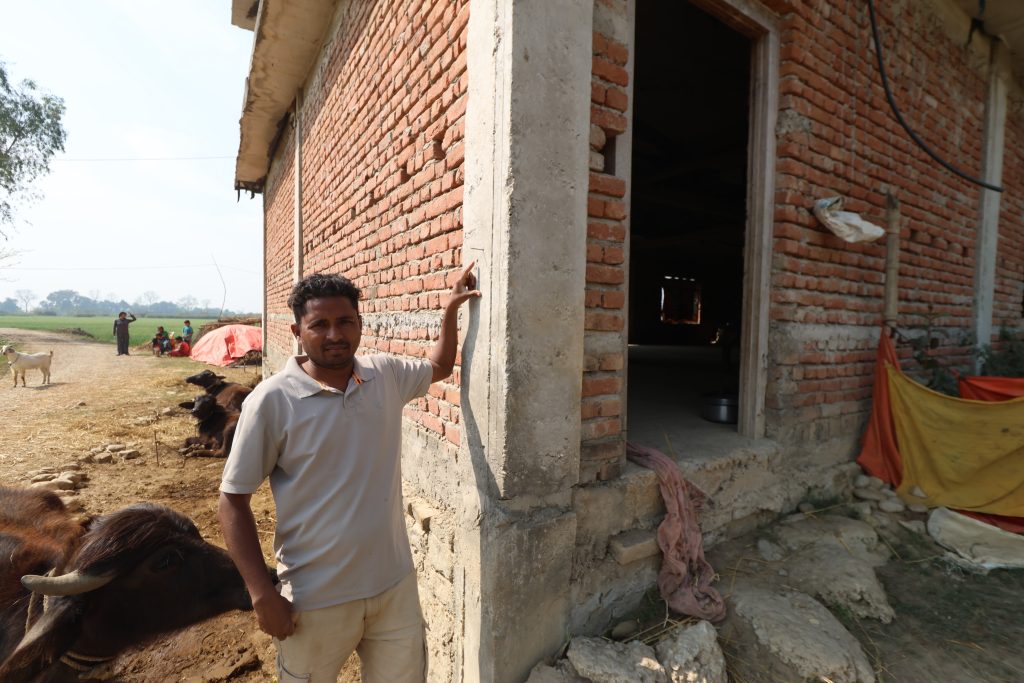
Caption: Milan shows the water level at the safe shelter
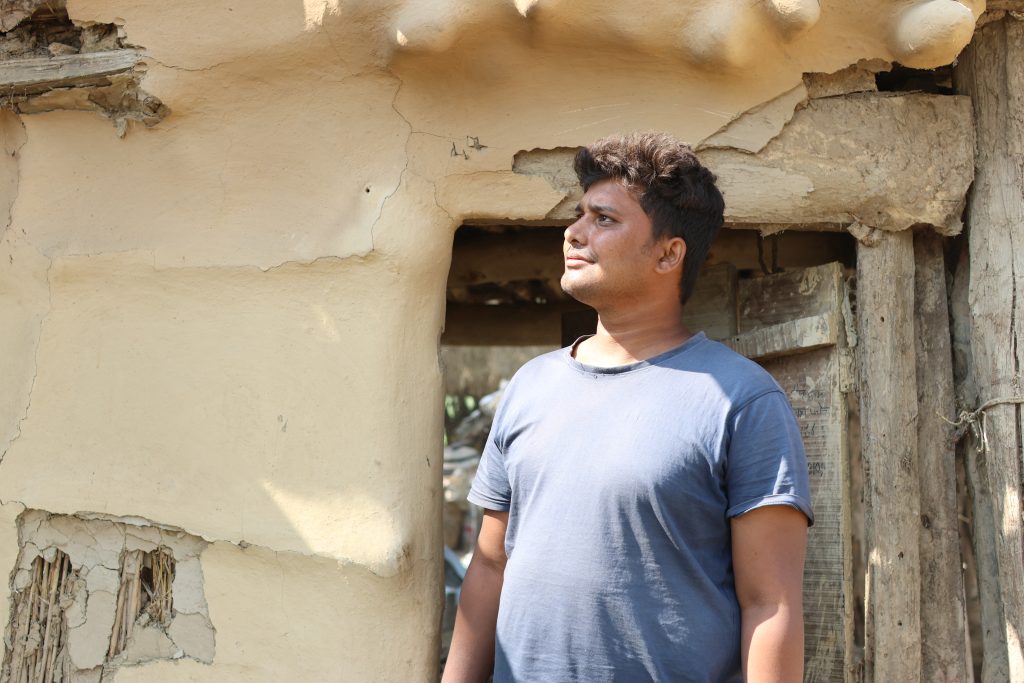
Caption: Milan’s younger brother Ganesh
The three generations put their hands together to farm 17 kattha of land, growing wheat and rice. The land is under his late father’s name, ailaani, and Milan hopes it will pass to him and his wife in time. He speaks of that future carefully, without assuming it.
What he is more certain about is the new house. Built on a raised foundation several feet up, tall enough to keep the water out, it is larger than anything the family has had. Milan, who is the chairperson of the Nanuma Surakshit Awas Nirman User’s Committee, acknowledges two rooms may still feel tight for six people. But that is not the point.
“The new house is where I want my kids and parents to stay,” he says. “I sleep a little better knowing they will be safe there.”