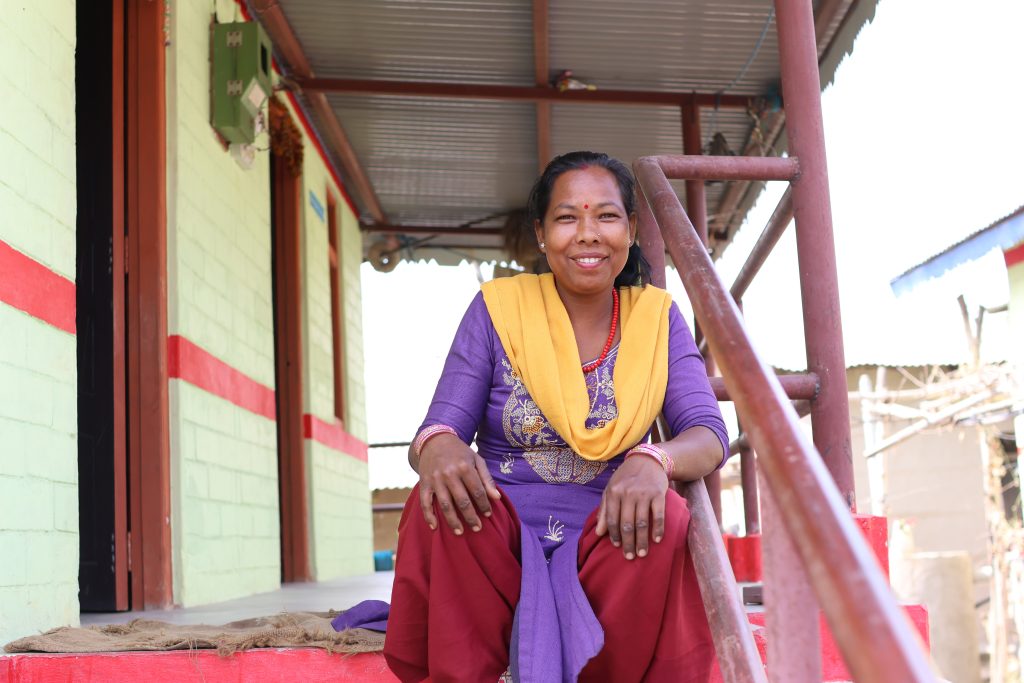
For several months each year, Asha Kumari, 37, manages alone. Her husband Prem Bahadur travels to Ratnagiri and Shimla to pick apples. Her son Dharmendra, now 19, has started going with him. What their four kattha of farmland yields in rice is not enough to carry the family through the year. Asha says, “We’d die of hunger if he didn’t go to India.” That leaves Asha and her daughter Dikshya, 16, at home through the monsoon.
The flooding came every year. Water would fill the house and recede, leaving behind a sludge so foul that weeks of cleaning could not remove the smell. What followed was predictable, diarrhea, fever, colds, the familiar illness cycle that comes after inundation. The grain they had stored which was supposed to last would be ruined. And then, when the water finally left, the work of maintaining their mud walls would begin again, a task that demanded constant attention just to keep the structure standing.
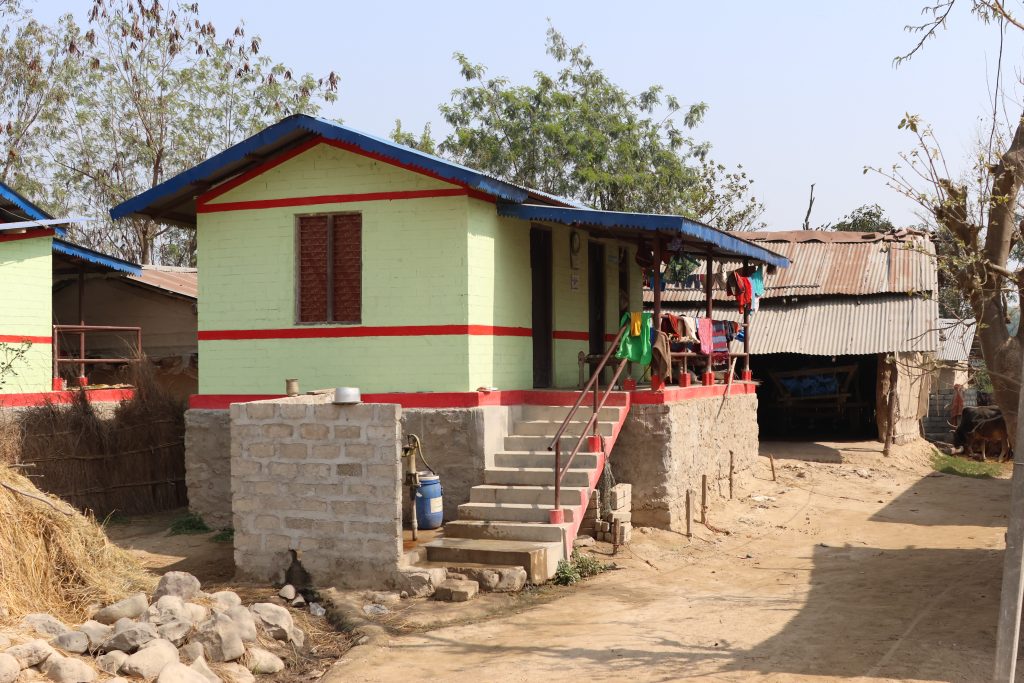
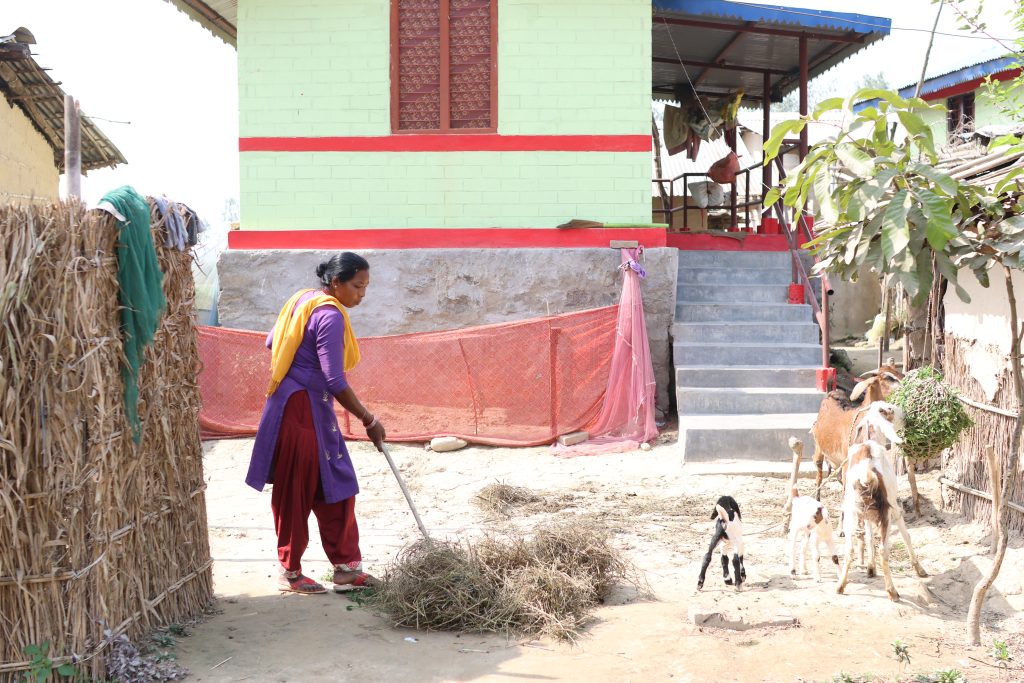
The new home, made with the generous support of SELAVIP, sits above the flood line. Its doors and windows are secure. Its walls do not need wiping down after rain. “It has all the facilities,” Asha says. “I don’t have to be wary of crocodiles or snakes.”
For a household that spends half the year at reduced capacity, two women, one of them a teenager, holding things together while the men seek work abroad, the difference is not abstract. A home that does not flood means grain that is not lost. A home that is structurally sound means time that is not spent on maintenance. A home with secure walls means two women who can sleep without the specific anxiety that comes from knowing what the monsoon brings.
Asha’s circumstances have not changed. The land is still four kattha. Prem Bahadur will still go to India next winter. But the ground beneath her family has, in one significant way, held firm.